

What Does Map Stand For On Youtube
What Does the Term 'Evangelical' Really Mean? Hither are ten Things to Know
The term "evangelical" has become a general term for Christians despite some differing opinions on just what that ways.
Many experts have weighed in on only what evangelism is and is not, and more and more the give-and-take is existence used in political and sociological terms. Despite the complexity of the term, it'due south clear the word may mean dissimilar things to dissimilar people.
Here are 10 things you lot need to know about evangelicals.
Photo courtesy: Unsplash/Rod Long
1. At that place is some fence on when evangelicalism started, but most agree that its roots are in the 18th century.
According to author Catherine Brekus, eighteenth century Protestants gradually created "a new kind of organized religion" that nosotros now know equally evangelicalism. Simply even before the 18th century, Protestant reformers used the word to depict their faith. In the 18thcentury, "evangelicalism" largely described Christians who emphasized a personal relationship with God, the practice of being born again, and a call to spread God's bulletin worldwide.
During this time, Christians saw the emergence of scholars and preachers that would become leaders of the evangelical movement— many whose piece of work is nonetheless preached on today. Those leaders included Jonathan Edwards, John Wesley and subsequently on, Charles Spurgeon and Dwight L. Moody.
Photograph courtesy: ©Thinkstockphotos.com

2. The term "evangelical" comes from the Greek word for "gospel."
The discussion comes from the Greek word, "evangelion," which means expert news or gospel. Historians believe that William Tyndale, a leader in the Protestant Reformation, was the starting time to record the English word "evangelical." In 1531, Tyndale wrote in a commentary on the book of John: "He exhorteth them to proceed constantly in the evangelical truth."
Later, the discussion was used past Catholic Sir Thomas More than to describe Tyndale and his "evangelical brother (Robert) Barnes." Barnes was an English reformer.
According to the Institute for the Study of American Evangelicals at Wheaton College, Martin Luther first used the Latinized form of the give-and-take evangelium to depict the non-Catholic churches that came out of the Protestant Reformation.
Photo courtesy: ©Thinkstock/tamara menzi
3. "Evangelical" is sometimes used as an all-encompassing term for Christians.
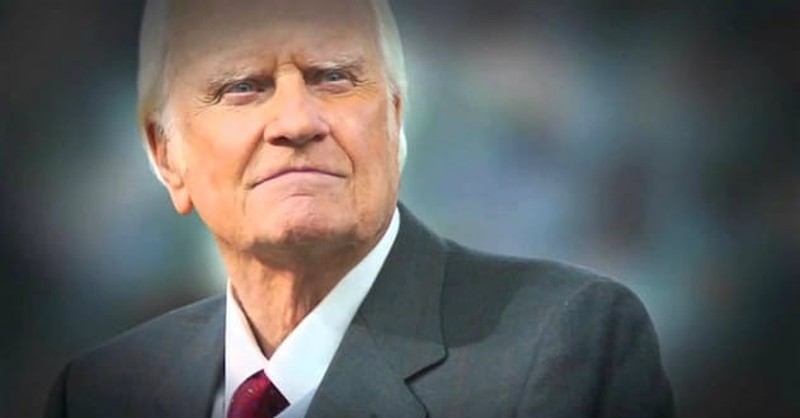
Fifty-fifty Billy Graham, who was heralded as a leader in the ascension of evangelicalism, said once that he was unsure how to define an evangelical Christian. He said, "Really, that's a question I'd like to enquire somebody also."
The word typically describes several denominations, churches and organizations and at that place is no single head of this "religion." Even in its complex history, evangelical was used as a general term. During the Swell Awakening, evangelicalism was a synonym for revivalism, a movement of Christianity led by pastors such every bit Jonathan Edwards.
Today, the word is used to describe the religious right, or in some cases, all Christians, or even the conservative masses.
Photo courtesy: YouTube.com

4. There are some main characteristics to evangelicalism.
The major tenet of evangelicalism is the conventionalities in existence "born once again" or conversion. Since the beginning of the motility, pastors and teachers have taught that Christians must repent and convert. Just how that conversion happens differs among Protestant denominations, simply near believe in a "new birth."
Some other major belief amid evangelicals is the belief in spreading the gospel message. History has almost recently seen that in the movement of Billy Graham, whose large gatherings inspired millions to seek God. In today's evangelical churches, at that place is often a meaning emphasis on spreading the gospel through mission work globally and domestically.
Photo courtesy: ©Thinkstockphotos.com

v. Evangelicals believe in a rapture and end times.
Often inspired by Tim LaHaye's and Jerry B. Jenkins' Left Backsideseries, evangelicals exercise believe in the render of Christ via the rapture. Simply how that return will be and what it volition hateful to the world differs among evangelicals, simply most believe in the second coming of Christ and that he will come to "rapture" believers to heaven.
Following this rapture, not-believers will spend seven years of tribulation on earth before Christ returns again and he will defeat his enemies and reign over earth.
All Christians exercise not agree on the details of the rapture and the end times, and interpretations take varied among scholars and experts. The Billy Graham Evangelistic Association says, "What is of import is that all Christians hold in common that Christ will ultimately return bodily, visibly, and gloriously to reign and rule with His resurrected and transformed saints forever and e'er. The details of this cracking event volition be made known in God's own time."
6. Another cadre belief includes a loftier regard for the Bible.
Evangelical Christians believe in the Bible as God's discussion and that it is the final authority for Christians. The National Association of Evangelicals, an organization of some 45,000 churches, says in its argument of faith: "We believe the Bible to be the inspired, the merely infallible, authoritative Word of God."
In response, critics have questioned the Bible'southward inerrancy, only some evangelicals have pointed out, among other arguments, that because God cannot err, the Bible cannot err. However, interpretation of the Bible varies among evangelicals. Some take a literal approach to God's Word and others translate the Discussion differently. "Estimation of the Bible is a singled-out subject field — as in how practise yous translate the bodily words of Scripture?" says author and professor Norman Geisler.
Photo courtesy: ©Thinkstockphotos.com

vii. Evangelicals are not all fundamentalists.
Virtually concur that evangelicals and fundamentalists are dissimilar or describe different things. Evangelicals are a broad group of Christians, while fundamentalists are as well Christians, but a sectionalisation of Christianity in itself. They are mostly politically conservative and take a literal estimation of the bible. Steve Waldman, editor in chief of Beliefnet, says, "Evangelicals take a much wider range of political views. A lot of them are conservatives, but non all of them."
There is an agreement between evangelicals and fundamentalists on some subjects, such as the belief that the Bible is inerrant as well as the need for conversion.
Photo courtesy: ©Thinkstockphotos.com
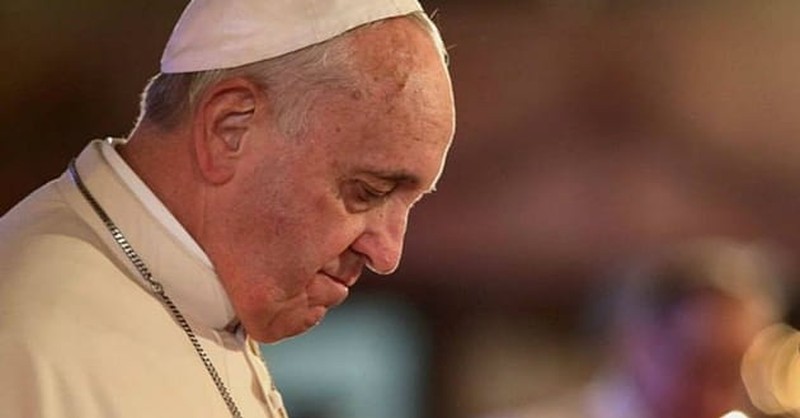
8. Some say Catholics cannot be described as evangelicals.
Because the term is a Protestant discussion and the movement arose out of disagreement with the Catholic church, some believe that Catholics cannot be described as evangelicals. Some experts have said that Catholics are not evangelical because, while they have the authority of the Bible, they besides requite authority to the church and the pope.
Today, there is some overlap betwixt Catholicism and evangelism, so some believe that a Cosmic can, however, be an evangelical. This is called "evangelical Catholic." Co-ordinate to The Washington Post, "Pollsters and sociologists note that in the 1990s and early 2000s, conservative white Catholics in particular and white evangelicals began making alliances over shared concerns, primarily traditional marriage, abortion, and legal religious protections."
Photo courtesy: Flickr.com
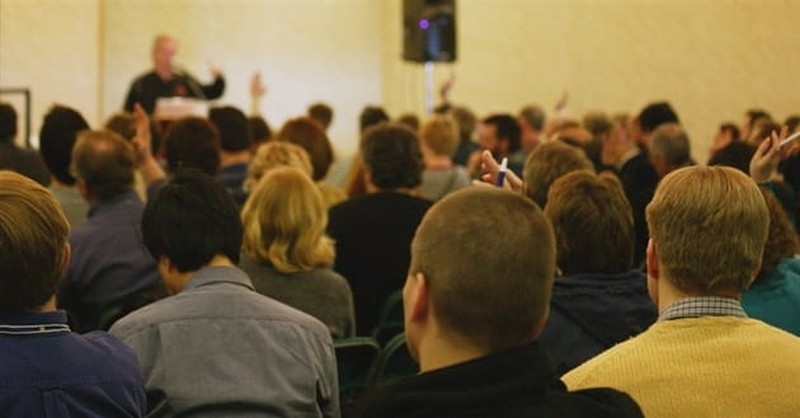
9. Studies are mixed on what groups are evangelical.
According to a 2014 study from the Pew Research Middle, about 76 per centum of evangelical Protestants are white. Nigh eleven percentage are Latino, and six percent are black. Ii percent place as Asian and five percent identify as mixed.
Another Gallup poll, however, showed that 61 percent of non-Hispanic blacks identified themselves as born-again or evangelical. Forty-four percentage of Hispanics said the same, and 38 percent of non-Hispanic whites too identified as born-again or evangelical.
Photo courtesy: ©Thinkstock/Design Pics
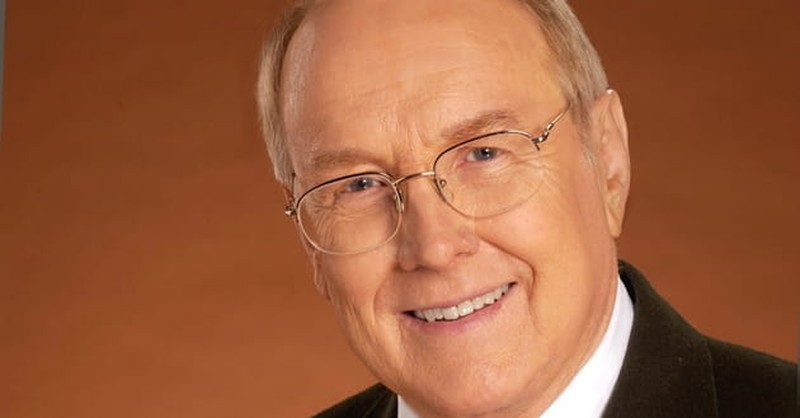
x. In that location accept been some impactful evangelicals.
While there is disagreement about the term evangelical, there are a few people that have been lauded as significantly influential to the organized religion. Every bit noted above, one of those people is the late Baton Graham, who became one of the most prominent evangelicals of all time.
Among others include Joyce Meyer, who launched a "feminine side of evangelism" with her videos and books; James Dobson, founder of Focus on the Family, and Rick Warren, writer ofThe Purpose Driven Life.Many evangelical leaders take faced criticism for their success, wealth, or behavior, but these Christians have largely plant a voice for Christianity.
This article is role of our Denomination Series listing historical facts and theological information nearly different factions within and from the Christian religion. Nosotros provide these articles to help you lot sympathise the distinctions between denominations including origin, leadership, doctrine, and beliefs. Explore the diverse characteristics of different denominations from our list below!
Catholic Church building: History, Tradition & Beliefs, Jehovah'southward Witnesses & Their Beliefs, The Church of Latter 24-hour interval Saints & Their Beliefs, Baptist Church: History & Behavior, Presbyterians: History & Beliefs, Mennonites & Their Beliefs, United Methodist Church: History & Beliefs, Seventh-Solar day Adventists & Their Beliefs
The Pentecostal Church building: History & Beliefs, Lutheran History & Behavior.
Photo courtesy: Wikimedia Commons
Publication date: June 15, 2018

Source: https://www.christianity.com/church/denominations/what-does-the-term-evangelical-really-mean-here-are-10-things-to-know.html
Posted by: whitfielddidess.blogspot.com
0 Response to "What Does Map Stand For On Youtube"
Post a Comment